A Little Help from Above

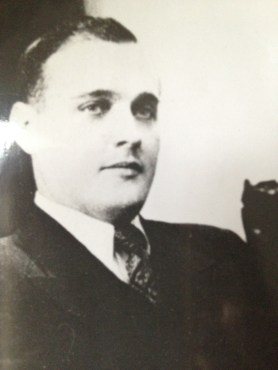
grandpaart
I lost my Grandfather Art (far left) one day in a Museum in Washington, D.C. God sent an Angel to help me find him.

Do you ever wonder if angels are real?  Do you ever wonder if God actually hears and answers your prayers?

I have a story that I always go back to whenever I start to doubt God’s ability to quickly answer my my fleeting prayers.

Several years ago, my elderly grandpa came down to visit our family in the suburbs of Washington D.C.  His visit came shortly after we adopted our son, Logan. I was still getting used to having a new baby and juggling two kids instead of one, but one fine day I agreed to take him down to Washington, D.C., to see the sights.  So one morning I loaded up my baby, my five year old, and my elderly yet still mobile grandpa Art (so, in essence, three young children) and headed down to the city, all by myself.  We arrived, parked, and promptly went to the Museum of Natural History.

If you’ve never been to the Museum of Natural History, you need to know that it’s a very large museum, with these huge wings that spread for about two blocks, and it’s several stories high. However, there is a central section which is great for meeting up at prearranged times, or in case you get lost.  Unless that person you are trying to meet up with is an elderly man who is hard of hearing, who doesn’t know how to use his cell phone or even hear it ringing, and doesn’t remember the time or the place where you were supposed to meet.

So that’s what happened. My grandfather went in one direction and I took my kids to another section and we were supposed to meet back in the middle at 1 pm.  I had his cell number and everything would be fine.

Until it wasn’t. Until he didn’t meet me where he said he would, and wouldn’t answer his cell.  Until I went looking and looking for him for a total of about an hour with a fussy new baby and a five year old.  I called my husband for some emotional support; no answer.  I went inside and outside the museum; no Grandpa. I looked high and low.  I even backtracked to the huge section of the museum he said he would be in.  I was just about to grab a staff member of the museum but I decided to walk outside (again) to make sure Grandpa had not wandered out there.  And then I remembered that in all of the confusion, I had forgotten to pray.

So while I was scanning the crowd, I prayed a silent prayer:

“Dear Lord.  Grandpa Art is lost.  I need your help.  Can you help me to find him?”

So there I was, just quietly standing and scanning, not making a sound, not looking distressed, when the man that was casually standing about two feet away from me turned to me and said “Excuse me, ma’am. Is there anything wrong?”

I decided that I would just be honest with him in the event God was attempting to help me.

“Yes, actually there is. My Grandpa is lost.  I can’t find him. I’ve been looking for over an hour and I can’t find him.  I’m freaking out.  He is hard of hearing and not answering his cell.  He’s lost.  I’m not sure you can help, but that’s what’s wrong.  Since you asked.”

He looked at me with a mixture of confidence and kindness and said the following words: “Do you see that group of kids?” (He pointed to a large group of high school kids.) I said “yes.”  He went on: “I’m a private investigator and I was hired by the school to keep track of all of these kids.  And I’m good at finding people.  I will find your Grandpa for you.  What is his name and what does he look like?”

My jaw dropped open while I gave him the description of my Grandpa which boiled down to: “well, his name is Art and he’s tall, thin and old.”

“Ok, I will find him for you. Wait here. I’ll be right back.”

Seriously.

So I stood there waiting with renewed hope. Not five minutes later the Angel, err I mean Private Investigator man returns with my Grandfather in tow!  I couldn’t believe it!

I thanked him profusely and hugged my grandfather. Then he turned and headed off to be with his student group.

That day I was freshly reminded of a profound, yet really very simple, lesson:

“God will help me when I pray.”

Even to such a degree that he sends a Private Investigator/Angel who randomly asks me if anything is wrong. God sent me the best that day to find my Grandpa.

I will close with a verse of Scripture:

“I lift my eyes to the hills, where does my help come from? My help comes from the Lord, the Maker of Heaven and Earth.”  Psalm 121:1

Amen!

I have a lot of moles; they keep me young

Image result for skin moles

True confession: I have many huge moles on my back. I think they are disgusting and I have to get them looked at by a Dermatologist every six months.  I have them removed if they get too big.  Several years ago, I was lamenting to my Doctor about how I hated to have so many moles, but he interrupted my complaining with the following words:

“Heather, there is actually one really good thing about having a lot of moles. People with a lot of moles age more slowly than those with less moles.  So, you will stay younger longer!  By seven years, actually.”

That got my attention, so I googled it, and sure enough, it’s true. According to one article:

  • People who have a higher mole count tend to age slower than those who have fewer moles (think: 100 moles compared to 25, says research published in the journal Cancer Epidemiology Biomarkers & Prevention.) The study observed more than 900 sets of twins—comparing the differences between their DNA—and found that those who had a higher mole count were less vulnerable to the effects of skin aging (the difference equated to about 6 to 7 years of aging). http://www.menshealth.com/health/is-your-body-7-years-younger-than-your-age. 

According to another article, which gets more into the weeds (you can skip this section if you don’t like weeds):

  • The reason for these links are unclear, but researchers have noticed that people with large numbers of moles have differences in the strands of DNA in each cell which carry their genetic code. Sections on the end of these strands are called telomeres, and are effectively a countdown timer governing the number of times a cell can divide to produce new cells. The longer the telomere, the more cell divisions can take place over a lifetime – and more moles were linked to longer telomeres. Dr Bataille, who presented her findings at a Royal Society of Medicine conference, suggested that moles were a visible product of the underlying system which controls body ageing. She said: “Some people will have two moles, some people will have 600, but when you have a patient with lots of moles, we noticed they tended to age better.” http://www.bbc.com/news/health-11813378

But before you get too excited, having a lot of moles means that your risk for cancer increases. Here is a nutshell if what you should look out for:

  • Moles that increases in size.
  • An outline of a mole that becomes notched.
  • A spot that changes color from brown to black or is varied.
  • A spot that becomes raised or develops a lump within it.

I guess there are two sides to every mole.

In conclusion, I have no idea if I am aging any better than the general population. I know I feel young and healthy, and my hairdresser, who is also one of my very best friends (who is in her early thirties herself), always tells me she agrees with this research because I “have very, very few gray hairs.” And then she adds with a cheeky smile: “Plus, you act kind of immature, like me.”

I agree.

I hate my moles, but if having a lot of moles means I will age better, I welcome the moles.

But I  will get them checked regularly, too. 🙂

Escape from Latvia – Conclusion (Coming to America)

erikgranniewedding

My husband with his grandmother on our wedding day.  Without her bravery, I would never have known him.

After barely escaping the firebombing of Dresden, Anna and Irena arrived safely in Austria where they lived in the Alps for several months.  Anna got a job as kitchen help to a woman who ran a boys’ boarding school for Austria’s wealthy class.  While Anna was busy cooking and cleaning, Irena played outside where the boys at the school taught her how to ski.  For the first time in her young life, Irena enjoyed an ordinary childhood filled with the simple things: dry clothes, food, sweets to eat, and jumping up and down on real feather beds that she could actually sink down into.

However, this was not to last.  News came that the Russians had taken Hungary and were at the Austrian border.  It was time to go.  Anna’s husband Karlis arranged for her and Irena to leave the country.  They packed their one shared suitcase and left the country, but on May 8, 1945, they found out some incredible news: World War II was officially over!  When Anna heard this, she looked down at her baby girl and began to cry.

It was over!  It was finally over.  And they had survived.

But almost immediately another thought invaded her mind: would they be able to return to Latvia?

History shows that there were more than 100,000 Latvians who either returned to Germany following the war, or found themselves in Germany at the war’s conclusion, and most of them became temporary residents of what was called “the American zone.” These Latvians had to either return to Latvia (which most did not) or stay in temporary refugee housing, awaiting relocation.

Anna decided it was best to not return to Latvia, so she and Irena spent several years in DP (Displaced Persons) camps set up by Americans. It was temporary housing, and much of what happened was unplanned and unpredictable – the size of the camps, how crowded, how quickly people would be assigned to sponsors, when and where they would get food and how much per family, how would they find their relatives, and most importantly: which country would take them in.  Refugee housing was humble and challenging: sometimes 8 families had to share a single room, with sheets hung between beds for privacy.

irena

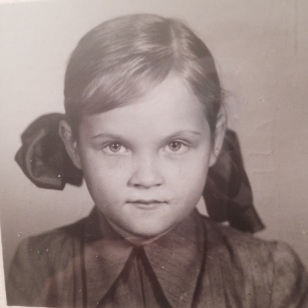
Irena, seven years old, when she was living in Germany in a Displaced Persons Camp.

Because there were so many refugees that needed homes, some nations, like the United States, Canada, and Australia (among others), stepped forward to allow some of them to come to them. However, a refugee’s family needed to be sponsored by a family from the sponsoring country.

“Whichever country picks us, we will go there.” Anna said to Irena.  Karlis was secretly hoping for the United States, but there were other countries that were willing to take these refugees, and they had no idea where they would end up.  However, it is rumored that Karlis, a well connected man, had called in some favors to request being sponsored to come to the United States.  Still, their future hung in the balance.

Finally, the day came when they didn’t have to wait any longer to find out where they would be living.

“Pack your bags Irena,” Anna said with a gleam in her eye. “We are going to America!”

In the spring of 1949, Karlis, Anna and Irena were sponsored to come to America by the First Lutheran Church in Oklahoma City.  They boarded the HMS Stewart, a troop carrier, and crossed the Atlantic. Anna breathed a huge sigh of relief when she saw the statue of Liberty.  After New York they still had to make their way to New Orleans.   Finally, on November 15, they arrived at the harbor in New Orleans and boarded a train to Oklahoma.

frontpage

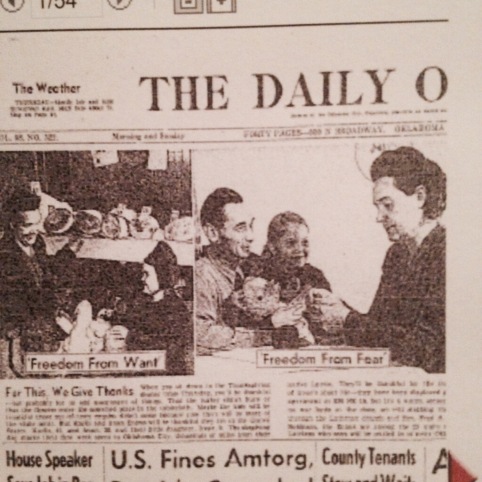
Their arrival made the front page of the Daily Oklahoman newspaper.

To celebrate their arrival, the family of three enjoyed their first hamburger.  Later, they found out that they were the first refugee family to arrive in Oklahoma City as a part of the church’s refugee relocation project. The church provided living quarters in their community building (upstairs was a complete apartment), in return for which Anna and Karlis maintained and cleaned the church and the church’s community building.  After they settled into America, Karlis and Anna celebrated the birth of their daughter, Aija.

The years flew by and Irena eventually grew up, met another Latvian refugee also named Karlis, got married and had three sons – Eduard, Erik, and Andrew.  Their middle son is my husband, Erik.

As Anna grew older, she was still unsettled about one final issue: her relationship with the Lord. Although she knew without a doubt that God had indeed protected her and Irena throughout the war, she was uncertain as to whether she would be admitted into heaven when she passed.   Her grandsons and their wives shared the gospel with her many times, and one day Irena presented a simple gospel tract in Latvian to Anna.   The tract said that God loved her and desired a relationship with her, but that sin separated her from that relationship.  Repentance of sin and faith in Jesus Christ for the forgiveness of sins would restore that relationship and give her the peace she was searching for, peace to know that her sins were forgiven and her soul was secured forever in Heaven with God.  After reading the tract, Anna turned to Irena and indicated that she wanted to pray to receive Christ as her Savior.  In Irena’s own words:

“She prayed the prayer with me, and her eyes filled with tears as she expressed sheer gratitude for sharing this with her. No longer would she need to talk about going to heaven in terms of “I hope.”  She was elated, and amazed at how simply and easily that light went on and now she understood.”

Two years later, on November 25, 2012, Anna passed into eternity at the age of 100, leaving a shining legacy of courage and tenacity to all of the generations that now enjoy this wonderful home we all call America. Her three grandsons gave her Eulogy, and she was buried in Wisconsin with her family and close friends at her side.

Closing comments:

Our family recently watched Back to the Future, which made me think of this story.  If Anna and Irena had not survived the war, Erik would not be here, and I would not be here, at least in the same way.  We would have never adopted our three beautiful kids, with one more adoption on the way.  It’s crazy to me that of the 60 million refugees wandering around during World War II, that Anna, Karlis, and Irena made it to the United States, especially considering that only 34,000 Latvians immigrated to the U.S. following the war.  It was clearly God’s will for them to survive the war, start a new life in America, and have kids and grandkids.

I miss “Grannie Annie” as we lovingly called her. She would tell us all of the stories I have chronicled here, and many more that went unrecorded, in her thick Latvian accent.  So many times the six of us grandkids (the three boys and their three wives) would spontaneously exclaim: “Man.  We need to write all of this down, Granny Annie!  It’s so amazing how you and mom even survived!  Someone’s gotta write this stuff down!”

So here it is, peeps.

I know Anna is looking down from Heaven and smiling on her family tree.  There is a little bit of Granny Annie in every single member of my husband’s family, and I’m so grateful to know each of them and call them my family as well.  Of course, I am partial to Grannie Annie’s favorite grandson Erik.  I think Erik is her favorite because he resembles her first husband, Juris.  (I am also putting this sentence in here to see if anyone in the family will notice. Ha.)

So Granny Annie, if you are reading this blog from Heaven: Thank you for your courage and drive, because none of us would be here if it weren’t for you.  We’re proud of you and we will have a big party in Heaven when we get there.  Your stories and miracles have bolstered my faith.  We love you!  Love, your Granddaughter, Heather

I hope Anna’s story has bolstered your faith as well, My Dear Reader.

________________________________________________________________

A few additional research notes:

All told, by some estimates, a total of about 60 million Europeans became refugees during the entire World War II period. According to the United Nations, a million people had yet to find a place to settle by 1951, more than five years after the fighting stopped.http://time.com/4029800/world-war-ii-refugee-photos-migrant-crisis/

By 1959 some 900,000 European refugees had been absorbed by west European countries. In addition, 461,000 had been accepted by the USA, and a further 523,000 by other countries. But many ‘hard-core’ refugees still remained in camps.http://www.bbc.co.uk/history/worldwars/wwtwo/refugees_01.shtml


Escape from Latvia part V – Last Train out of Dresden

irenaontrain

Irena, left, on a train, with an unnamed little boy.

February 13, 1945 found Anna and Irena in Dresden, Germany. Dresden was called “The Florence of the Elbe” and was regarded as one the world’s most beautiful cities for its architecture and museums. It was the seventh largest city in Germany and was an important industrial city, known for its china.

“Wake up, little one,” Anna said to Irena, shaking her softly. “We are going to Austria today.  But first we need to go to the train station to get tickets.”  Irena rubbed the sleep out of her eyes and rolled out of bed.  Later that afternoon, they headed to the train station.

During the war, train stations were a constant hub of activity, teeming with people attempting to secure a limited number of train tickets. Because there was so much demand and so little supply, it was often very hard to get one ticket, let alone two.

They arrived together with their one suitcase between them. Anna found a large table at the station, so she hoisted their one piece of luggage up and laid it flat on the table, and then lifted Irena up so she was sitting on top of the suitcase.

“I need you up high so I can see you. Mommy is going to go wait in that line over there to try to get us tickets.  Wait here for mama, ok?”

“Yes mama,” said Irena, looking at her with trusting blue eyes as she placed both hands on either side of her, touching the suitcase. “I will guard the suitcase.”

Anna got in a very long and slow line that eventually placed her around a corner and out of sight. There was nothing else for Irena to do but just sit there and watch people.  Irena noticed that there were so many, many people at the train station that day, all of them rushing around.  They seemed to be in a hurry.

Finally, Anna returned smiling, holding up two tickets. “We have tickets!  Our train leaves in an hour.”

An hour later they boarded their train and headed out of the city. By now the sun had set and the countryside was dark and quiet.  Irena yawned several times and then began to doze against her mother.

All of a sudden the same low, familiar rumble of bomber plane engines filled the night sky.  The planes passed directly overhead. The train came to a complete stop and, just like the time on the refugee boats, all the lights went completely off, and the passengers were ordered to remain very quiet.   The passengers all sat there quietly for a period of time.

“Mama!” Irena whispered to Anna.  But Anna immediately put a finger to her lips and pointed out the window.

They both watched as the sky became a faint orange glow as Dresden, now very far away, was being firebombed from above by those same planes that had recently passed overhead.  They could faintly hear the rumble of impact as bomb after bomb shook the land.  Soon, the city was on fire and caught up in a complete firestorm; the orange glow could be seen for miles.

Between 25,000-35,000 people were killed that night in Dresden, many of them refugees, and most of them women, children, and older people.  About 800 British and American plans dropped incendiary bombs filled with highly combustible chemicals such as napalm.  Due to the firestorm, many people were actually sucked into the flames and burned alive.

But just a few passengers were safe on board a very dark and very quiet train outside of the doomed city.

“What is happening mama?”  Irena whispered to her mother.

“The city is being destroyed,” she said softly.  By the light of the orange glow Irena could see a tear spill over Anna’s cheek.  Then Irena saw her mom bow her head and close her eyes and whisper something that Irena couldn’t hear.

The time was 10:14 pm. They had just left the train station a little after 8.

To read the conclusion of Anna’s story, click here: Escape from Latvia – Conclusion (Coming to America)

____________________________________________________

Author’s note: in conducting research for this post I learned that there were an unknown number of refugees in Dresden at the time of the Allied attack, so it is impossible to know exactly how many civilians perished. Estimates today range from 35,000 to 135,000. Looking at photographs of Dresden after the attack, in which the few buildings still standing are completely gutted, it seems improbable that only 35,000 of the million or so people in Dresden at the time were killed. Cellars and other shelters would have been meager protection against a firestorm that blew poisonous air heated to hundreds of degrees Fahrenheit across the city at hurricane-like speeds. At the end of the war, Dresden was so badly damaged that the city was basically leveled. click here.

Also: On the evening that Dresden was leveled, the US’s plan to initiate the bombing was delayed due to severe weather conditions and was instead fulfilled by the British Air Force. click here. My question is: was the plan to hit Dresden earlier that evening and then the British RAF was going to follow up after the first strike (this was often the pattern during the war)? I wasn’t able to find this information in my research, but I am glad that weather delayed the first part of the attack. I believe it’s possible that the bombings could’ve started earlier than 10:14 pm.  Either way, I am truly grateful for the miracle that occurred for my husband’s mom and grandmother!

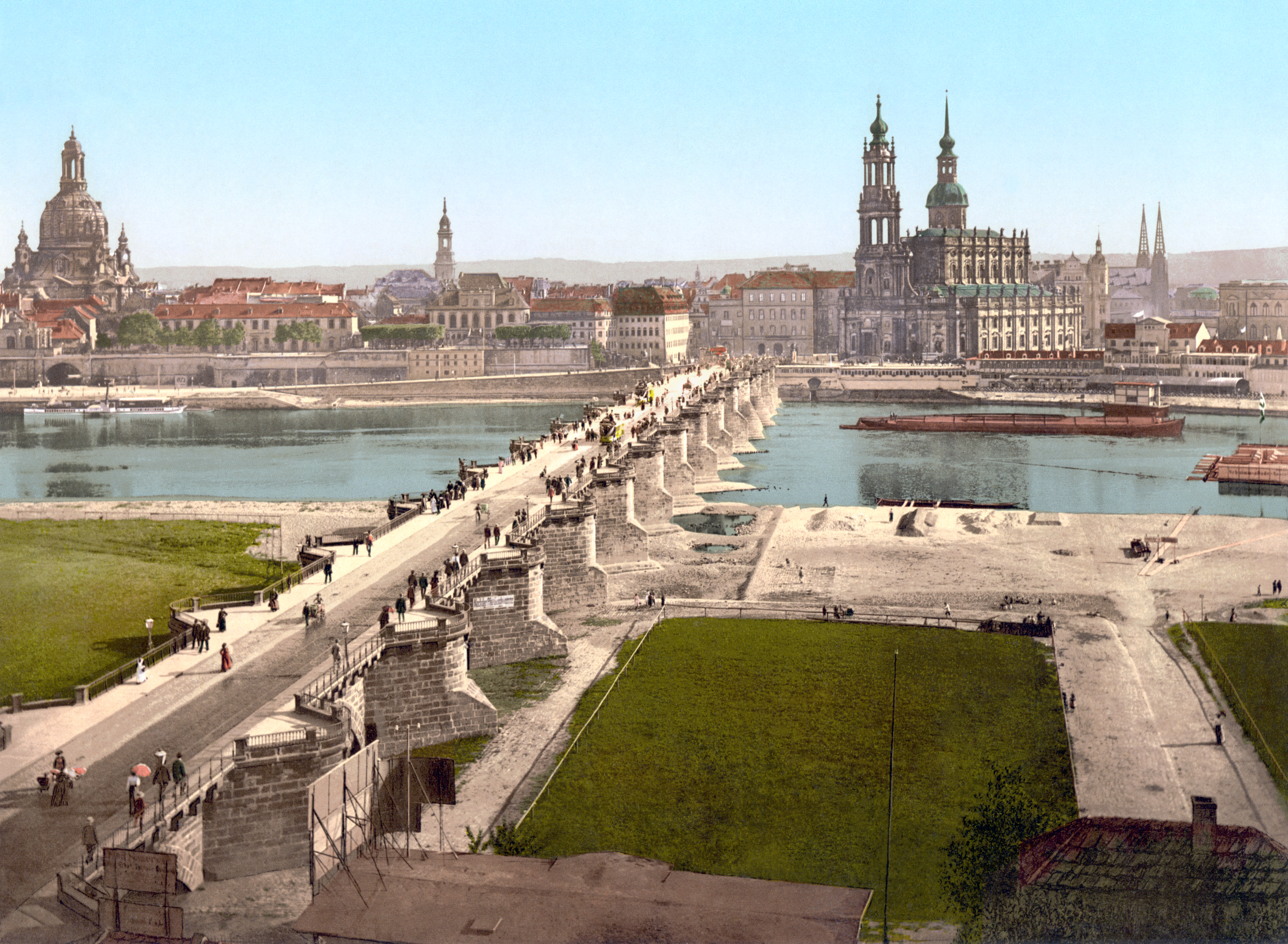
Image result for Dresden before WWII

Dresden before WWII

Image result for Dresden Germany after WWII

Dresden after WWII

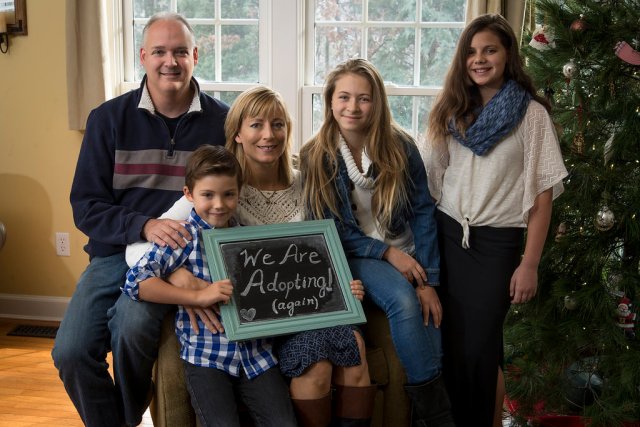
We are adopting (again!)

we-are-adopting

Yes, it’s true.  We took a five year break from any and all things related to adding to our family in part because Khloe was a very hard adjustment (just being real) and, let’s face it, having three kids is hard enough to manage as it is.

So here is the big announcement: we are excited to inform all of you that our family, God willing, will all be traveling to Latvia this summer to adopt a little boy ages 4-7!  Normally, Latvia does not allow the adoption of one young child (current law is ages nine or above for one child, but they allow you to adopt younger children of a sibling group of three or more).  However, through a lot of time, effort, and energy I was able to get my husband Erik his Latvian citizenship this summer, so now he is a dual citizen!  Because he is now an official citizen of Latvia, we can adopt a much younger, healthier child.  How cool is that?!

Erik now brags that because he is a Latvian citizen, he is going to make Latvia great again or join the Latvian Olympic team in whatever capacity they need a middle-aged man who is in average shape.  🙂

I completed all the paperwork (which was a part-time job in itself) and now we are waiting for our referral.  We have been told by our agency that we should receive up to three referrals to choose from.  I am both nervous and exited about this.  How weird will it be to look at three little faces, read some information about them, and then have to choose between the three?!  But that is the process, or so we’ve been told.   We then travel to meet the little boy and have to stay in country for about a month, when we can travel back with him.  Erik and I then have to return to Latvia two more times to complete the process.

So why Latvia and how was I able to get my hubby citizenship?  My husband’s side of the family came over as World War II refugees and his mom and grandma have an amazing story of courage, survival, and down-right miracles which I started on this blog here.

We are inviting Irena, Erik’s mom, the little girl in the story, to travel with us because she speaks fluent Latvian and it would be great to have her help.  Because Irena fled during the war, her descendants are still eligible to receive citizenship!  Citizenship in this case allows us to be put on a “special list” to be able to adopt a younger kiddo.

International adoption can be very hard. We found Khloe in Ukraine, literally while driving back to the Kiev airport empty handed after what we thought was a ‘failed’ adoption experience. That was a challenging adoption highlighted by Khloe ultimately leaving the orphanage in tears because she did not want to go with Erik and cursing him out in Russian for the next several hundred miles. You can read our live blog of that experience here.

In closing, we would very much appreciate your prayers for a boring and smooth process (no shut downs or changes), that God would lead us to one very special little boy who is a wonderful fit for our family, the right timing to travel, and God’s grace and help along the way.

Thank you friends and family for your support!


Escape from Latvia Part IV — Bombings and Miracles in Germany

picforblogannairena 

The refugee boat docked in Lubeck, Germany, and Anna and Irena shuffled off with all the other Latvian refugees looking for a fresh start. Anna eventually made her way Berlin, some 286 kilometers away.

The life of a WWII refugee is one of temporary refugee housing, moving from place to place, trying to find temporary work, air raid sirens, bombings, and emotions that waver between constant low-grade anxiety to full blown panic. Especially if that refugee is a single mom with a young child.

One night, while Anna and Irena were fast asleep in their small refugee apartment, air raid sirens split the quiet night air. Irena sat upright in bed, fully awake, heart pounding.   Anna rushed over to Irena’s bed and shook her awake:  “Irena!  Get up, we have to go!”  Irena sat up in a daze as her mother grabbed her by the wrist and pulled her too strongly out of the bed.  They headed for the front door of the apartment.  When Anna opened up her front door, they came face to face with Anna’s girlfriend, who was also flying down the staircase.  The two women grabbed one of Irena’s little hands each and ran as fast as they could down several flights of stairs, with Irena in the middle.

As they turned a corner in the stairwell, suddenly there was a huge flash of light and a very loud BOOM through the large glass window that they were directly beside. The boom was so loud and the flash was so bright that the women instinctively stopped and put their hands over their heads – expecting an immediate explosion of glass.

Incredibly, the glass window held. By some miracle, they were saved from the shattering of glass and the destruction of the bomb.

The women hastily made their way to the basement into the air raid shelter. There were many men, women, and children all crammed together in this small room, but the room was far from safe, or peaceful.

“We’re all going to die,” a woman next to Anna shrieked.

“God help us!” Another man yelled.

As the bombs exploded throughout the city, the people in that little bomb shelter in Berlin continued to scream and yell. Anna hugged Irena tightly to her chest in a protective cradling position.  After what seemed like an eternity, the last bomb fell and all grew quiet.  The frazzled group then slowly emerged from the shelter and headed back up to their apartments in a daze.  Sleep was elusive that night.

The next morning Anna took Irena outside to survey the damage. The smell of exploding bombs and fire was alive in the morning air.  As she turned the corner of their apartment building, she stopped cold. There, on the ground, was a large bomb that had been dropped from the sky, but that had not exploded.  For some reason, this bomb had not detonated.  Anna realized that this bomb was positioned right near the corner of their air raid shelter, just a few feet from where Anna was huddling with Irena the night before. Had the bomb went off, they would’ve all been killed.  Anna silently prayed a prayer of thanks to the Lord for his protection.

Anna and Irena eventually left Berlin for Leipzig – where there were more air raids and more bombings. Many nights Anna and Irena made their way to air raid shelters as different cities were under attack.  Many nights the two of them spent huddled in fear with other refugees, all of them not sure if they would make it through the night.

About this time, Anna finally got some good news: she had received a job in Austria, working as a cook in a boarding school for Austria’s wealthy children. She would have food, shelter, safety, and a little bit of money.

“Irena, we are going to Austria! Mommy has a new job!” Anna smiled down at Irena while the little girl looked back at her with trusting eyes.  It was not possible to give Irena any semblance of a normal childhood, but perhaps with this new job, Anna and Irena would be able to find some safety and security for at least a small season.

Before reaching Austria, however, they had one more city to stop in to catch a train for their new destination.

They had to stop in Dresden, Germany.

The date was February 12, 1945.

To read the next and best part of this whole series, click here: Escape from Latvia part V – Last Train out of Dresden

Escape from Latvia part III, the List

Losha came to Anna one night with some troubling news:  “Anna, there is a new list. You are on it.”

“The List” was short for the Deportation list.  Thousands of Latvians had been shipped to Siberia’s harsh labor camps, while thousands more were tortured and killed in Communist death chambers.  Latvia’s tiny population of 1.2 million was decimated; only one half of her people remained.

“The List” was a death sentence to those whose names were found on it. Sadly, the list grew daily as Latvians, Communist sympathizers, and others in fear for their own lives, cooperated with the occupying forces by reporting on and betraying their friends, family, and neighbors. Only the very brave would tell their friends and family in advance if someone they knew and loved was on the dreaded list.

Anna’s heart fell and she  knew she had a big decision to make.  Should she stay in Latvia and attempt to evade authorities, or leave her homeland, perhaps forever?

Anna was now remarried to a good man named Karlis and was living in Riga, Latvia’s capital city.  Karlis was eventually drafted into the war, leaving Anna and Irena, now three, to fend for themselves. It was during this time that the tug of war for Latvia between the Germans and Russians continued.  Things were better in Latvia when the Germans had control. Around this time the Germans pushed the Russians out of Latvia and declared Marshall law.

With great sadness, Anna decided that leaving Latvia was in her and Irena’s best interests.   Anna packed up their humble belongings, placed Irena in a baby carriage, put a loaf of bread in her lap, and walked towards Riga Harbor.  Her new husband had arranged safe passage on a refugee ship bound for Germany.  It was a long walk, and as they moved between war zone and neutral zone, they had to crawl on their bellies at night to avoid detection.

At last they entered Riga Harbor and boarded the crowded refugee ship.  Anna looked around and noticed something striking: there were so many women and children!

“Where are all the men?” she asked to nobody in particular.  She watched the boat slowly pull away from Latvia’s coastline, the only home she had ever known.

Anna looked down at her three year old daughter and squeezed her hand. Irena looked up at her with her blue eyes and sweet smile.  Irena was such a good girl, and Anna was thankful.  When she looked back up, Latvia’s coastline was gone.

A couple of nights later, as Anna was tucking Irena into her tiny bed, she heard the growing rumble  of war planes, many of them, flying overhead.  From somewhere along the coast line she also heard the wail of air raid sirens.  All of the sudden, all of the lights turned off in the ship.  Anna and Irena were it utter darkness.

“Mommy,” Irena asked too loudly. “Why are all the lights off?”

“Hush child,” Anna said. “we need to be quiet so that those airplanes don’t hear us.”  So there they sat, Anna cradling Irena, in complete darkness and silence.  They waited.

After the planes had passed, the lights eventually came back on. Anna wanted to know why the lights had all turned off, so she found a ship mate.

“Oh don’t you know?” He asked casually.  “If they see our boat, they will bomb us,” he said simply.

They continued on and arrived in Germany a few days later.

The only problem was that the country of Germany, during this stage of World War II, was about the absolute worse place a young widow refugee and her little girl could possibly be.

To read Part IV, click here (this is a great one by the way): Escape from Latvia Part IV — Bombings and Miracles in Germany

Escape from Latvia part II — Rounded Up

juris

Anna’s husband, Juris.  Sadly, Erik never met his grandfather.

Anna and the entire group of men were surrounded by Russian soldiers and forced, at gunpoint, to begin marching towards town. Anna was the only woman in the group and the last person in line.  She had heard the stories, and she knew what was happening was very, very bad.

As she quietly marched with the other men, suddenly, in her mind, there appeared a picture of her tiny, three month old daughter, Irena. Irena!  Who would take care of her?  What would happen to her?  Irena was safely staying with Juris’ parents in the countryside, but how long would she be safe?

“Please.” She spoke in Russian as she twisted around as much as she could and tried to make eye contact with the guard behind her.  “Please let me go.” The guard continued to look straight ahead and then butted her with his rifle.  Anna turned back around and kept walking.

About a minute later, Anna turned around and said in a frantic whisper: “I have a newborn baby girl at home. Please, please let me go.”  The guard looked at her quickly but then immediately looked straight ahead while remaining silent.  She stumbled and righted herself, then turned back around to look straight ahead.

A few moments later, in one last attempt, she twisted around and whispered: “please, sir.  Please let me go.  I just had a baby, she’s only three months old, please let me return to her.”  Anna stared intently at his eyes while continuing to walk forward.  The guard would not meet her eyes, but for a quick second she thought she saw a softening in them.  After what seemed an eternity, he finally made eye contact with her.

The guard spoke softly and forcefully: “Turn around and go. And don’t ask any questions.”

Sensing this was her one moment, she quietly and softly stepped out of line, backed away from the group, and then ran as fast as she could into the night. She stole one more glance at her beloved husband. The last image she had was of the back of his head as he was led farther away towards town.  He didn’t even know she had left the line.

Anna was torn. Should she keep running?  Or go back to the Russian soldiers and plead for the life of her husband?  It was a miracle that she had just been let go; she knew that.  What would be the chances that they would let her husband go as well?

With great sadness and resolve she chose to turn around and return to her apartment. Sleep was elusive that night, and Anna tossed and turned until dawn.

The next morning she walked into town and was told that the Russian soldiers had taken all the prisoners to the town prison.  Upon reaching the prison, she learned that the Russian army (the NKVD) had already left the town, and in the process, had hastily executed its prisoners during the night!

Anna was stunned! What happened to Juris?  Was he executed?  Or did he manage to be released by some miracle?

Anna hoped against all hope and went inside the prison to look for her husband.   She found another woman digging in the dirt, looking for something.  Anna looked at her with questioning eyes, while recognizing that this woman was the wife of another man rounded up with Anna’s group the night before.  Oh no!  They both looked at each other with a sense of knowing as Anna dropped to her knees and began digging in the dirt a few feet away from this woman.

A few minutes later her nightmare was confirmed as she recognized Juris’ clothing peeking through the ground. She gasped!  As she continued to move dirt away from the clothing, she found the face of her beloved.  She was stunned to see that her once handsome husband was completely disfigured!  It was clear that Juris was not hastily executed the night before, as she had been informed.  Instead, his eyes were gouged out and ears cut off, tongue ripped out, and his jaw had been broken. In addition to this, he had also been shot!  It was clear that he had been tortured at length.

Anna burst into tears and continued to cry over the dead body of her husband. The woman next to her had also located the body of her husband.  The two women cried guttural cries in unison for a very long time, as the ground underneath them turned to mud.

Finally, Anna left the prison in a stupor, barely making it to her apartment. She collapsed on her bed in a heap.

After a long time of crying, her thoughts returned to her present circumstances, and of course, to her sweet baby girl.

She knew she had to get Irena – and also to let her husband’s parent’s hear the terrible news. However, a friend had told her that the city had been sealed off by the Germans.   She would not be able to leave the city!

Not knowing what to do, Anna sent word to her older brother Losha to come and help her. He came to her apartment and she burst into tears once again.

Looking straight into her eyes, he sternly declared: “I am so sorry about Juris, Anna, but you need to be strong. You need to be strong for Irena!”

Anna met his gaze, and with her blue eyes red with tears, she nodded and said “yes.”

The two of them hastily packed a small sack of food and a change of clothes and left the apartment. Under the cover of darkness, both Losha and Anna evaded the German guards and escaped the city, crawling on their bellies to avoid detection, and walked the 30 kilometers to Juris’ parents’ home.  They eventually made it to her husband’s family home and told them the awful news that their son had been executed.

To read part III, click here: Escape from Latvia part III, the List

jurisgrave Juris’s grave.


Escape from Latvia -Anna’s story, Part I

In between the giant nation of Russia and the lovely and cold Baltic sea sits three small sister nations: Latvia, Lithuania, and Estonia.  Before World War II, the rolling hills of Latvia boasted a population of 1.2 million.  After that war, only 600,000 of her countrymen remained.

What happened to the other half of Latvia’s people? Sadly, many of them either died or were outright executed, many more were packed up like cattle and shipped to work camps (some as far as Siberia and the North Pole), while the rest bundled up everything they owned, grabbed their young children by the hand, and walked out of Latvia forever, joining thousands of other refugees in war-torn Germany and other parts of Europe.   By war’s end, many refugees had died in cities that were destroyed.  Of the survivors, most were unable to return to their homeland and were forced to relocate to other countries.  Only a few (about 34,000) were fortunate enough to relocate to the United States to begin a new life.

One of these brave refugees from Latvia was named Anna, who, along with her young daughter Irena, fled their country and navigated through Western Europe, barely escaping death on multiple occasions, and lived for several years in a safe zone in Germany, before eventually settling in the United States. Anna and her daughter made a wonderful new life in America.

Irena eventually grew up, got married, and had three sons.  All of Irena’s sons are now married and have children of their own, and Anna’s legacy of bravery and perseverance lives on in the lives of her children, grandchildren, and great-grandchildren.

I have benefited greatly from Anna’s courage, for I married Erik, her favorite grandson.  🙂

This is their amazing story of survival, courage, and God’s protective hand.

Chapter One – Anna’s Early Years

Anna Ancans was born on December 9, 1911 in Malkalni, Latvia. Anna was the youngest of eight children with bright blue eyes and long, wavy, thick brown hair.

fullsizerender-2

Anna’s day started at 4 am while it was still dark, as she lived on a small a small working farm in the far eastern regions of Latvia, where it was her job to herd and watch the cows.  She attended school, which was 8 km way, with her brother Losha.  They both lived at their school during the week.  Anna remembers packing six slices of rye bread, some barley, potatos and – if lucky – a bit of homemade cheese into their little white cloth food bags and hope it was enough for the week.  She liked learning, and geography became her passion.

After school, and moved to Riga, Latvia’s capital. There, she worked at the Dzervju Art School and Library.  She also worked for a time in bookkeeping and for the Ministry of the Interior.  Life was simple, but money was tight back in those days.  In order to save money for her one dress or shoes, she often would eat bread and soup in the “Student Kitchen” in Riga, where the poorer students regularly gathered for a hot, cheap meal.

A few years later she met and married handsome Juris Maskalans.  Juris was an accountant, he served in the Home Guard, and was a musician and poet.  Juris was outgoing with a great sense of humor. He was loved by everyone. He often played his guitar at informal social gatherings, and  Anna later said that he reminded her of Elvis Presley.  She and Juris married in 1939 at the age of 28.

In June 1940, Russian soldiers – hundreds of thousands of them – were at Latvia’s borders.  Soon after, Losha learned that Anna’s entire family was on a list for arrest and deportation.   The city of Rezekne was sealed off by the Russians.

One day the phone rang.  It was Anna’s older sister Emilija calling.

“Anna, I had a dream,” her sister said breathlessly.  “In my dream I saw Latvia’s fields, covered in blood.   What do you think that means Anna?”

A nervous shiver ran down her spine and she instinctively reached for her belly.  Anna was pregnant.  She wondered how this instability would affect her and her new baby.  A few months, on February 18 1941, they welcomed Irena was born on February 18, 1941.

1941 was the Year of Terror in Latvia.  And one night, that came true for Anna.

About three months after the birth of Irena, Anna and Juris went over to a friend’s house to play cards. While all the men gathered in the living room upstairs, Anna went down to the basement to get some food.  Suddenly, she felt the sharp point of a bayonet at her back.  It was a Russian soldier – fiercely demanding that Anna tell him who was upstairs and what they were doing.  Anna explained that they were simply enjoying a game of cards.  Suddenly, she could see more soldiers surrounding the home.  She was filled with fear.  In just a few moments her life would change forever.

To read Part II – Escape from Latvia part II — Rounded Up

To read Part III –  Escape from Latvia part III, the List

To read Part IV (if you only read two parts, read this one and the next) – Escape from Latvia Part IV — Bombings and Miracles in Germany

If you only read one part, read this one – Part V – Escape from Latvia part V – Last Train out of Dresden.

Finally – Escape from Latvia – Conclusion (Coming to America)

Little Boy Lost (Logan’s adoption story)

It all started with an email.

After four and half years of enjoying our sweet daughter Claire, it was time to put our names into the hat to adopt again.   I had completed the necessary paperwork for the same agency that we adopted Claire, updated our adoption album, and the “waiting game” had begun.  As with our adoption of Claire- you can wait a week or you can wait a year, but there is always a wait built into the adoption process –always.  So I was surprised when we got an email so suddenly from our social worker letting us know that there was a birthmother, due soon, who was interested in beginning a conversation with us about adoption.  But there was a catch: this birthmother, although carrying a healthy baby boy, had overdosed on medication very early in her pregnancy.  Would we still be interested in her seeing our album?

I asked Erik what his thoughts were. He said: “Well, Claire’s birthmother drank heavily for nine months straight and God protected her in the womb.  So let’s trust God again, and go for it.” We said yes, and to make a long story short, we met with beautiful Kristin, hit it off right away, and she chose us to parent her baby boy!  Our little family of three was over the moon with excitement!

The baby boy, whom the birthmother had named Logan, was born without a hitch and was a beautiful, healthy baby boy indeed. But according to Virginia state law, the birthparents have 25 days to change their mind about the adoption, so we could not adopt him right away.  Erik, Claire and I excitedly started a nursery and bought diapers and formula, all the normal things expectant families do.

Our excitement was tempered somewhat when we approached the 25 day mark. We heard from our agency that the birthfather had registered himself on website called the Virginia Putative Father registry.  What did that mean?  That’s when our social worker told us some bad news: it seemed the birthfather did not want his parental rights to be terminated and would most likely contest the adoption.  Oh no!   There was a court date in two months and we would know more then.   My social worker told me guardedly: “I will be honest with you Heather.  This is not a good sign, but don’t give up hope.  We need to see what happens in court.  Maybe he will allow this adoption to go through after all.”

After two difficult and nerve-wracking months, the phone rang. It was our social worker, asking us to drive down to the adoption agency to meet with the birthfather, as he had requested a meeting with us.   We were all hopeful that this was a good sign, and we met with him a few hours before he was scheduled for court.  My first impression of the birthfather, I’ll admit, was very positive.  He was tall, very handsome, and seemed genuinely nice.  We chatted back and forth for about an hour or so, and I thought we had a great connection with him.  The meeting went well!!  The crazy part was that he was due in court that very day, and had to make his decision in literally about an hour from the time we met with him!

I vividly remember him leaving the office and walking out to his car (I was watching from a window). When he got to his car he started anxiously pacing back and forth.

“Hon, look at him,” I said to Erik. We watched him pacing for several minutes before getting into his car to drive to the courthouse.  “That’s not a good sign.”

We were driving home when we got the call from our social worker. She told us that the birthfather had indeed filed for custody of his son, and would not allow his parental rights to be terminated!!   She told us that this was most likely a closed door as Judges very rarely, if at all, rule against a child’s biological parents.  The birth father was ordered to complete a home study and come back in six months.  He also had the option to begin visitation with Logan.

Our social worker said we should consider this a closed door. After hanging up the phone, we both started to cry buckets of tears right there in the car. I couldn’t believe that our adoption had just fallen through!  It was a long drive home.

After mourning our loss for a couple of weeks, we decided to go back into the waiting pool at the adoption agency so other birth mothers could review our album, but they were hesitant to start communicating with us because they knew that Kristin had chosen us, and we were all in limbo until the second court date, which was scheduled for six months from that time.

Remember what I said about the fact that there’s always a wait built into every adoption? Well that’s where our wait occurred – right there in the middle of the story — for six long months.

What we didn’t know was that God was working behind the scenes, in unexpected ways, using everyday people to accomplish His purposes.

During the long six month wait, there were a lot of people in limbo. For starters, our poor birthmother was caught in a time warp, trying to decide if she should parent her son, even though she felt that adoption was in his best interest.  In the end she decided that she would parent Logan if it came down to it, rather than allow him to go to the birthfather, as she knew things about him that led her to believe that he was not a good man.  Kristin remained strong and resolute during the whole process and didn’t give up hope that good would come from this difficult situation.

Secondly, it was a long wait for Kristin’s parents, who were wondering how the story was going to turn out. In order to burn off nervous energy, Kristin’s dad took matters into his own hands and started to dig into the background of the birthfather.  He met with some folks, followed up on some rumors, and hired a Private Investigator.  What he found was very disturbing: it turned out that the birthfather had a serious criminal background.  The birthfather was not a good man, and Logan’s grandfather was determined to keep Logan away from him.  They actually wondered if Logan’s birthfather really even wanted Logan, or if he just wanted to have some sort of twisted power play over Kristin.  Logan’s grandfather diligently gathered documentation to use against the birthfather in court.

It was also a long wait for the adoption agency and Logan’s foster family, as they had only signed up for the typical 25 day foster care timeline. They were wonderful people, however, and loved Logan as their own son.

It was also a long wait for poor Logan, who was in limbo in foster care, awaiting his forever family, whoever that would turn out to be.

Of course, it was a long wait for us, too. So we did what most Christians do when they don’t know what to do: we prayed.  Erik, Claire and I prayed diligently, many of our friends and family prayed, and Kristin’s mother was continually praying for God’s will to be done for sweet Logan.

After nine long months of waiting and praying, everything came to fruition one cold day in February when the second court date finally arrived. We were all on pins and needles, wondering what the Judge would decide.  Erik was at work but I was at home praying non-stop when the call came through.  It was our social worker.

I could actually hear the joy in her voice when I picked up the phone: “By a miracle of God, the Judge ruled against the birthfather and terminated his parental rights!! Logan is yours!   We just need to schedule a Placement Day and then you get to take him home!!”

Our little boy lost would now be able to come home to us forever! I called up Erik at work and we both started crying on the phone together (spontaneous, intense crying is built into every adoption as well).

img_3125

But how did this happen? Why did the Judge rule against Logan’s biological father?  It turns out that there were three main factors.  First, the birthfather failed to complete his home study and didn’t visit Logan even ONE time during the six month period.  Secondly, the birthfather did not have a parenting plan in place.  Thirdly and most importantly, the Judge accepted the criminal background information on the birthfather that Logan’s grandfather was able to provide to the court.  It was clear to the Judge that Logan being parented by his biological father, in this case, was definitely not in Logan’s best interests.

Two weeks later our little family of three drove down for the Placement Ceremony!

The Placement Ceremony was a wonderful, emotional, joyous celebration. Unfortunately, Logan cried and screamed during most of the ceremony, but his crying did not diminish our joy at becoming his parents.  Logan became our son on February 13, 2009.

In the years since, we have been privileged to enjoy an open adoption with Kristin and her parents. We love them as if they are a part of our family.  We’ve visited them and they have visited us.  Logan knows his full story and knows and loves his biological family.  Open adoption has really worked for us and has been a blessing for Logan.

I recently called Kristin’s dad for the writing of this post.   I thanked him for doing his part in Logan’s story, and I asked him if he thought his investigative work played a role in court that day.  He answered very simply and humbly: “I don’t think the adoption would have gone forward without the information we were able to bring to the court.”

“You saved a life,” I told him directly. “In my opinion, at least.   You changed the course of a human life.”

In conclusion, I want to specifically single out Logan’s beautiful and amazing birthmother Kristin for remaining strong for nine uncertain months, and for giving us one of the best gifts we could possibly receive. We cannot imagine life without our active, funny, intense, deep, sweet, sporty, smart, and big-hearted son.  You are amazing Kristin and we love you.  You are family!

As I look back on the story and see how many moving parts had to perfectly coincide for the miracle of Logan coming into our family, I am so very grateful to God, for making everything turn out the way it was supposed to be for everyone. I am so glad that not only is Logan a part of our family, but Logan’s entire biological family is now a part of our family, too.